

Today I will share with you another morning practice, intended for those who have already discovered the power of chanting mantras. When you wake up in the morning, the first thing you should do is practice these mantras:
- Mahamrityunjaya Mantra — eleven times
- Gayatri Mantra — eleven times
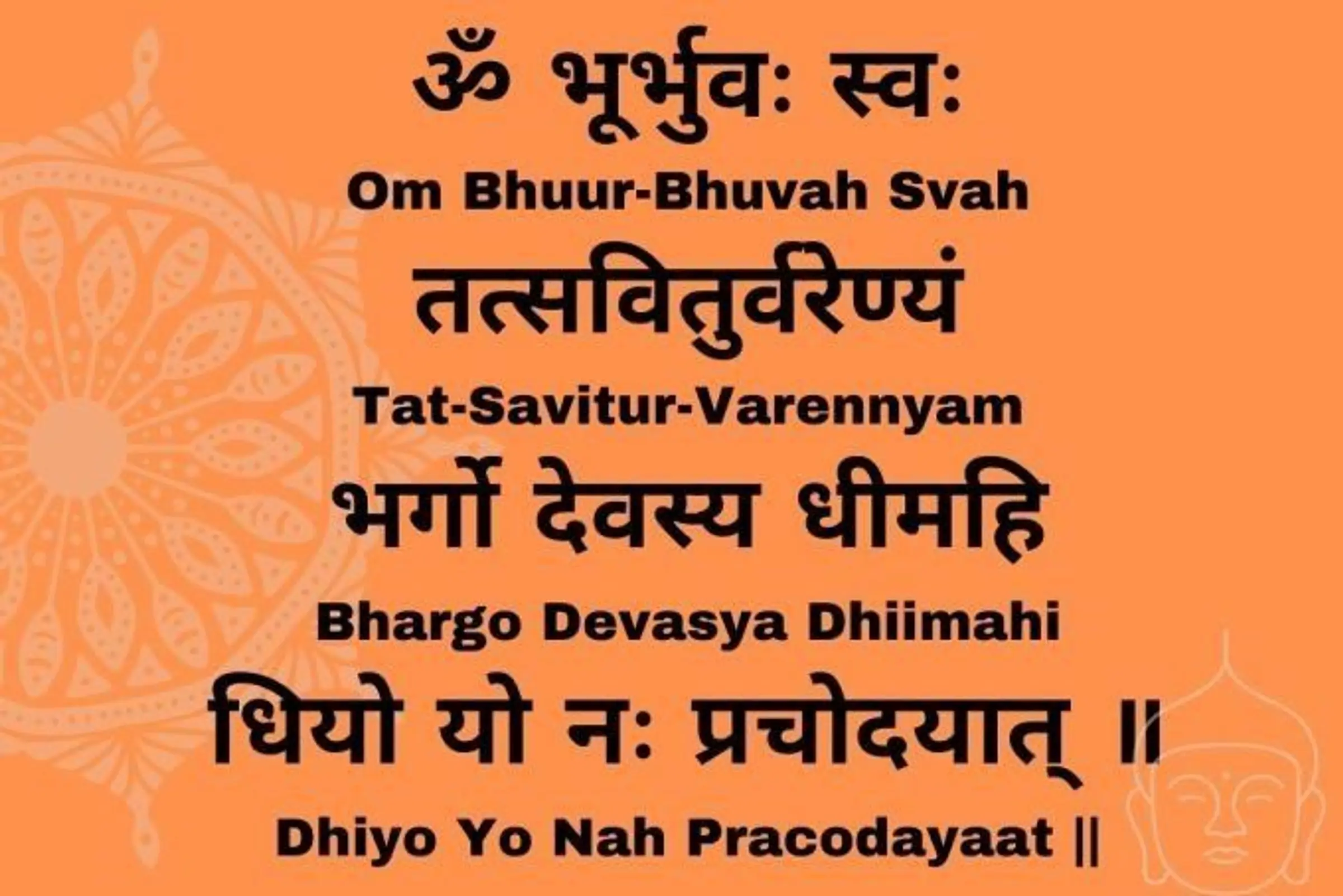
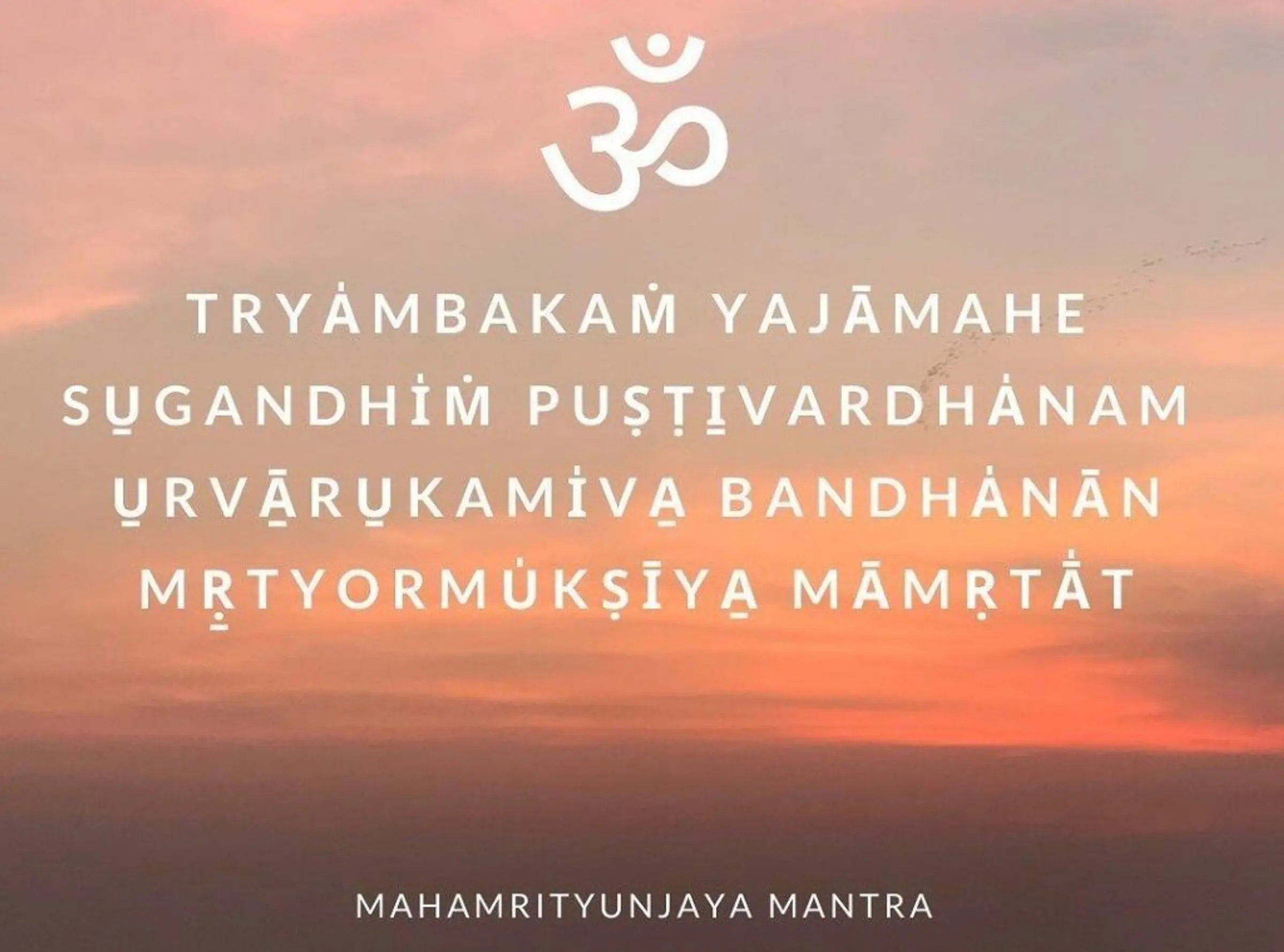
Why should these mantras be performed in the morning?
Because in the morning the brain is relaxed, having just had a good night's rest. The mind is not agitated; it has not yet confronted the reality of the world. It is in a calm, relaxed state. Immediately after waking, before you get out of bed, sit up in your bed. When you do this, you will notice that you are drowsy, not fully awake. At this moment, when you are neither fully awake nor fully asleep, when you are drowsy, when you find yourself between sleep and waking, the subconscious mind is active.
At one end, you have the faculty of the conscious mind, which is fully engaged and integrated with sensory experiences. At the other end, you have the faculty of the unconscious mind, which is completely disconnected from sensory experiences. The power of the subconscious mind sits in the middle, as the link between the conscious and the unconscious — the source in which you can strengthen the mind, develop creativity and cultivate positivity. It is this subconscious mind that you must protect from the influences of the external environment and from negative, destructive tendencies.
According to yogic philosophy, the subconscious is the seat and source of mental energy. It is in the subconscious that you can develop a strong willpower. By working with the subconscious, you can change and modify patterns of behavior and thought. The conscious mind, by itself, is only one-sided awareness, a one-sided perception: you and the world, and that's all. This one-sided connection does not allow the will of the mind to develop, because it is directed toward the objects of interest of your senses.
At New Year, people make positive affirmations and resolutions. None of them last longer than January. By February you're back to your normal behavior and your normal self. This shows that your connection to your environment and the material world scatters the mind's faculties and energies, and does not allow a SANKALPA, a resolve, to be born, because the mind is too scattered. So the conscious mind is, in a sense, a redundant mind, since it interacts only with the world of the senses. It does not inspire the development of a different quality of life. The unconscious mind is likewise unhelpful, because you have no access to it.
A good yoga teacher can gain access to your subconscious through Yoga Nidra, and can plant many seeds in your subconscious while you are sound asleep, without you even knowing what is happening.
Swami Niranjanananda Saraswati wrote about his experiment:
Some children wet the bed when they sleep at night. Others are weak and lack concentration at school. Five or six minutes after they fall asleep, shake them gently so that their eyes open and close. This means they are in a state between waking and deep sleep. They are half asleep. At this time, say four or five sankalpas, ten times each. You will notice a change within a week or a month. The child will live with new enthusiasm.
Swami Niranjanananda Saraswati replies: I became aware of the power of the subconscious at the age of eleven, when in Great Britain I had to give a lecture to a group of doctors. On the night before the lecture, as I was going to sleep, I had a dream in which I was giving the lecture, and when I woke up, everything I had said was very clear to me. I wrote it all down, word for word, sentence for sentence, every point. After I delivered the lecture to the group of doctors, they said, "Where did you study?" I said, "I didn't study." They said, "You were talking about biofeedback, a science that we were still developing in the seventies." I had spoken about GSR, galvanic skin response, about the effect of asanas and pranayama on the heart, which can be observed with an ECG, the effect of meditation on the brain, which can be monitored with an EEG, and about monitoring alpha, beta, theta and delta waves. In other words, it was a purely scientific lecture that I delivered.
The next day I began to think, "Where did this knowledge come from, which I didn't have until yesterday?" I asked Sri Swamiji, my Guru, the next time I had the chance to see him, and he simply smiled at me and said, "That is only one thing. Many more things will surface in your mind." As I grew up, I came to understand that he had sown seeds. While I slept, he would speak about the Bhagavad Gita, history, mathematics, geography, physics, chemistry, literature, the Upanishads and the Vedas. The next day he would give me a book to read, and upon opening a page I would think, "I've read this somewhere before; I know this subject." Where I had read it, or when, I could not remember. In this way it was easy for me to grasp the subject, almost instantly. It would simply come alive. That was the result, the effect, of yoga nidra.
Yoga nidra works on the subconscious. Even when you practice yoga nidra, you will often experience being neither asleep nor awake. You feel that you were awake the whole time, yet you don't remember the instructions that were given, from the opening Hari Om to the closing Hari Om — even though you feel you were awake throughout. This means that the instructions entered the subconscious, bypassing the conscious mind and going straight into the subconscious.
When you wake up in the morning and the subconscious is active, make three resolutions at this moment, three sankalpas. These resolutions, these sankalpas, are like seeds that you plant in the ground, and then forget about, letting them germinate naturally and spontaneously. After making your sankalpa, don't even think about it.
Timing matters, because the subconscious is active. At this time alpha waves predominate, and the first impressions that enter the mind determine the state of the mind for the rest of the day. If you perform the mantras after bathing, it makes no sense; your feelings, emotions and beliefs have already surfaced and created a great jumble inside.
The first sankalpa concerns health and well-being: its aim is to attain physical, mental, emotional and spiritual health.
Make the sankalpa, "I will be healthy, wealthy and wise," and chant the Mahamrityunjaya Mantra eleven times, sitting on your bed, at a volume audible only to you.
When you finish the Mahamrityunjaya Mantra, make another sankalpa, to gain wisdom and understanding. Everyone can gain knowledge, but few gain wisdom and understanding. These two are the most wonderful qualities in life — not the capacity for knowledge, not the capacity for intellectual creativity, but the capacity for understanding.
Wisdom and understanding. After this sankalpa, chant the Gayatri Mantra eleven times.
Those who have tried this early-morning mantra practice find that they are able to remain optimistic, positive, creative and clear-minded for the rest of the day. Mantras strengthen the mind and act like a shield protecting it from all the negative influences of the outer world. They keep the mind calm in the face of the worries, stresses and problems of daily life. They help preserve clarity of mind in every situation. That is why point number one is: the practice of two mantras (or three, if you are ready for it). This is the first morning sadhana, the first vitamin capsule you take upon waking.
Piyush Mittal
Nirmala Institute of Yoga and Ayurveda
Inspired by a lecture — Swami Niranjanananda Saraswati
Enjoyed this article?
Share this knowledge with your family or friends.
Piyush Mittal
· Founder of the InstituteTeacher of Integral Yoga, expert in traditional Ayurveda, and practitioner of Marma point therapy. For years he has combined authentic, source knowledge from India with a modern understanding of health and human development.


