

Hello, today I'd like to share with you one of the talks by my teacher, Swami Niranjanananda Saraswati, from the series Yoga in Daily Life, entitled "Meditation Before Sleep."
This is a ten-minute practice to do before going to sleep (you could call it Meditation Before Sleep). In fact, it is a combination of two practices.
Antar Mouna:

The first part is about de-stressing and clearing the mind of accumulated things. This is the practice of Antar Mouna (inner silence) — becoming aware of and observing your thoughts, clearing the mind of thoughts, of those impressions that dominate your awareness. Tensions, problems, whatever they may be, thoughts about family, about the next day — simply clear them within these five minutes through Antar Mouna. Take one thought at a time, observe it, and let it go. Then the next thought — watch it, and let it go. Practice this for five minutes.
Ajapa Japa:

The next five-minute part is Ajapa Japa: awareness of the breath moving from the navel to the point between the eyebrows. As you inhale, visualize the breath flowing upward from the navel to the point on the forehead between the eyebrows. As you exhale, visualize the breath flowing back down to the navel, and mentally repeat the mantra So-Hum. Soooooooo on the inhale and Huuummmmm on the exhale (NOTE: silently, only in your mind). Ajapa Japa means reciting the mantra, but only mentally.
A second way to do this practice: you can visualize a transparent tube running from the navel up to the point between the eyebrows. As you inhale, visualize this tube filling from the navel upward to the point between the eyebrows, and as you exhale, visualize it emptying from the top down to the navel, while mentally repeating the mantra So-Hum. Soooooooo on the inhale and Huuuummmmm on the exhale (NOTE: silently, only in your mind).
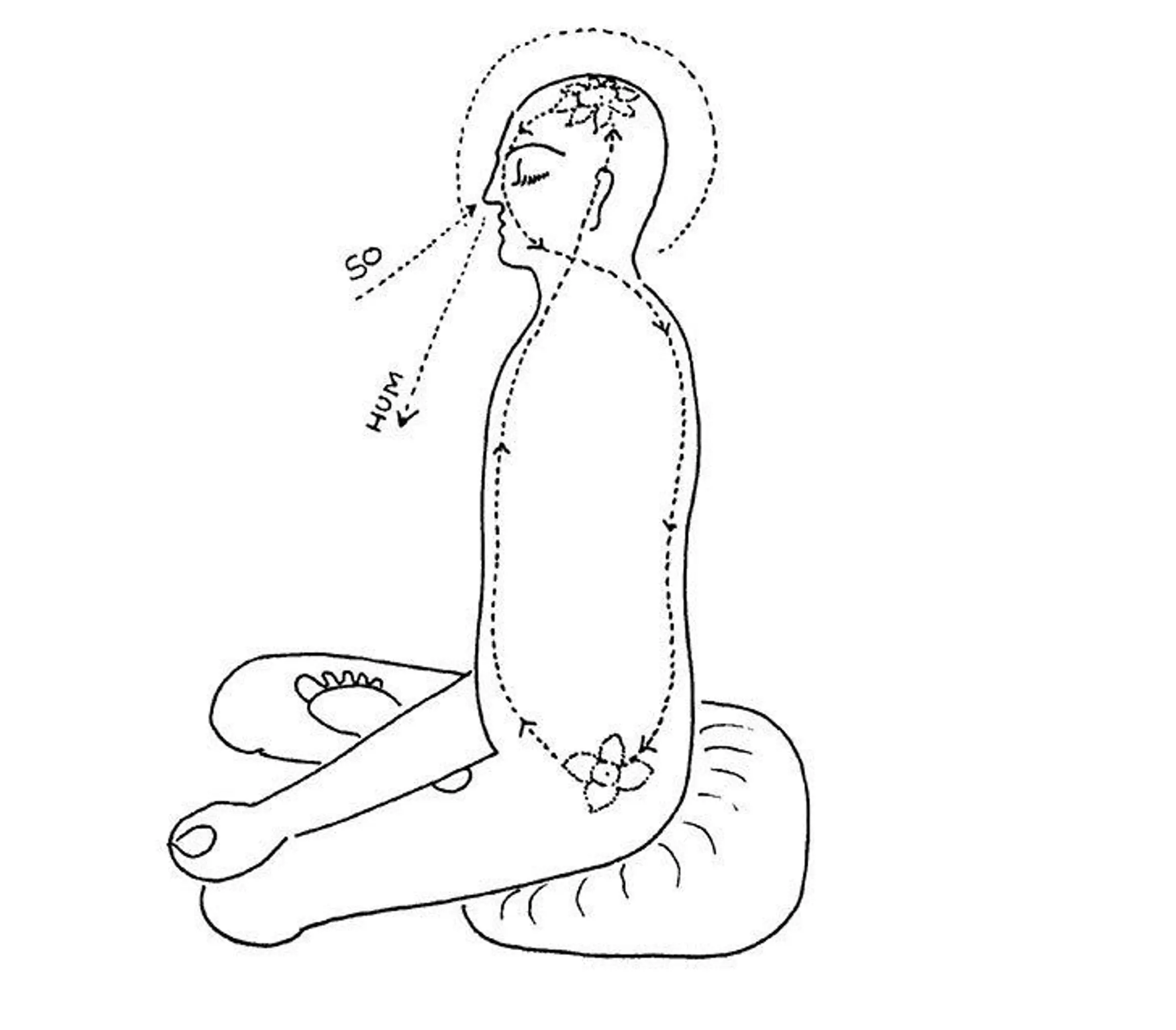
KABIR, the famous Indian saint, said that if you can practice the mantra So-Ham in such a way that it becomes part of every breath — So-Hum with every inhale and every exhale — it will open other dimensions of the self, and you will be able to hear the inner sound.
Five minutes of Antar Mouna and five minutes of Ajapa Japa are the proper meditation techniques to be practiced daily. When we sleep at night, unrecognized stresses and tensions surface. Unconscious tensions arise while you sleep at night. Often you wake up tired, as if you hadn't rested, even though you slept, and this feeling follows you throughout the day. Meditation keeps these tensions away from you. It doesn't let unconscious tensions disturb your night's sleep. As a result, you sleep well and feel full of energy, your thoughts are clear, and you are ready for a new day.
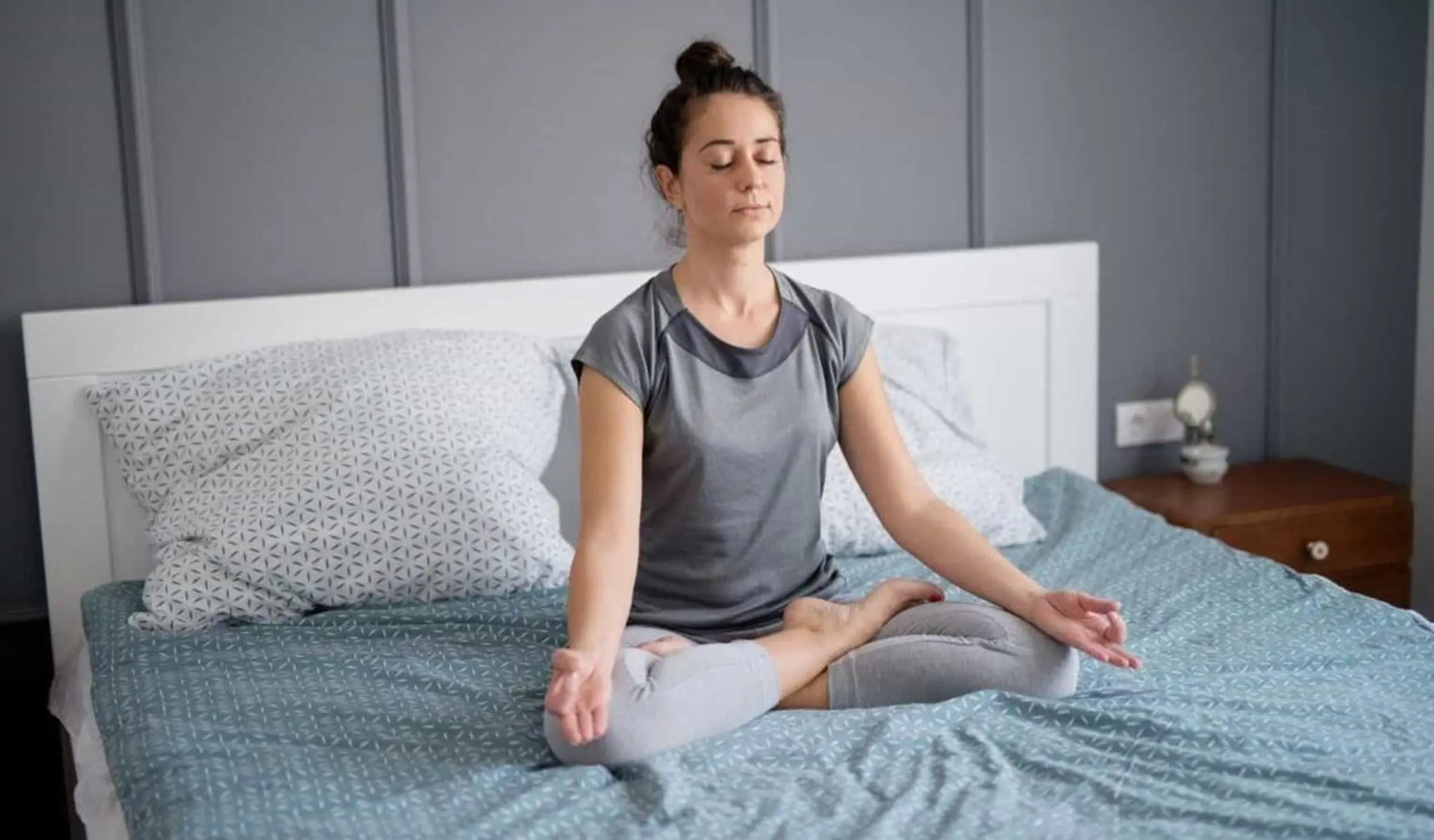
You don't need to practice meditation for an hour at all. If you do it properly, ten minutes of practice will give you the same result as a yogi who meditates for eight hours.
Piyush Mittal
Nirmala Institute of Yoga and Ayurveda
Photo source: Internet
Enjoyed this article?
Share this knowledge with your family or friends.
Piyush Mittal
· Founder of the InstituteTeacher of Integral Yoga, expert in traditional Ayurveda, and practitioner of Marma point therapy. For years he has combined authentic, source knowledge from India with a modern understanding of health and human development.


