

To introduce the practice and process of pratyahara, we must start from the basics, from kindergarten, because it is precisely in kindergarten that pratyahara lays the foundation for observing and training the mind. Pratyahara is the starting point that leads to dharana, and then to dhyana. People think of dhyana as meditation, and they want to practice meditation while skipping over pratyahara and dharana. But this is never possible. One cannot practice meditation without first perfecting pratyahara and dharana, because pratyahara and dharana remove the covering of the mind. The covering of the mind consists of the vasanas — the passions of life, the obsessions of life, the desires of life, the aspirations and ambitions of life. As long as these vasanas remain, covering the mind, one cannot enter the state of meditation.
Imagine that you put sugar into a plastic envelope, sealed it, and placed it in water. The sugar will be submerged in the water, but because it is protected by the plastic, it cannot merge with it.
This is the state everyone is in when they try to practice meditation without perfecting pratyahara and dharana.
You enter your mind, but nothing happens to it: no change, no elevation, no uprooting of samskara or karma, no cultivation of a newer, better virtue — nothing happens.
Instead, you lose yourself in the desire to see something: a form, a light, something manifesting. So you actually condition yourself to see something, and often the mind will simply create the image you want to see. But that is not meditation.
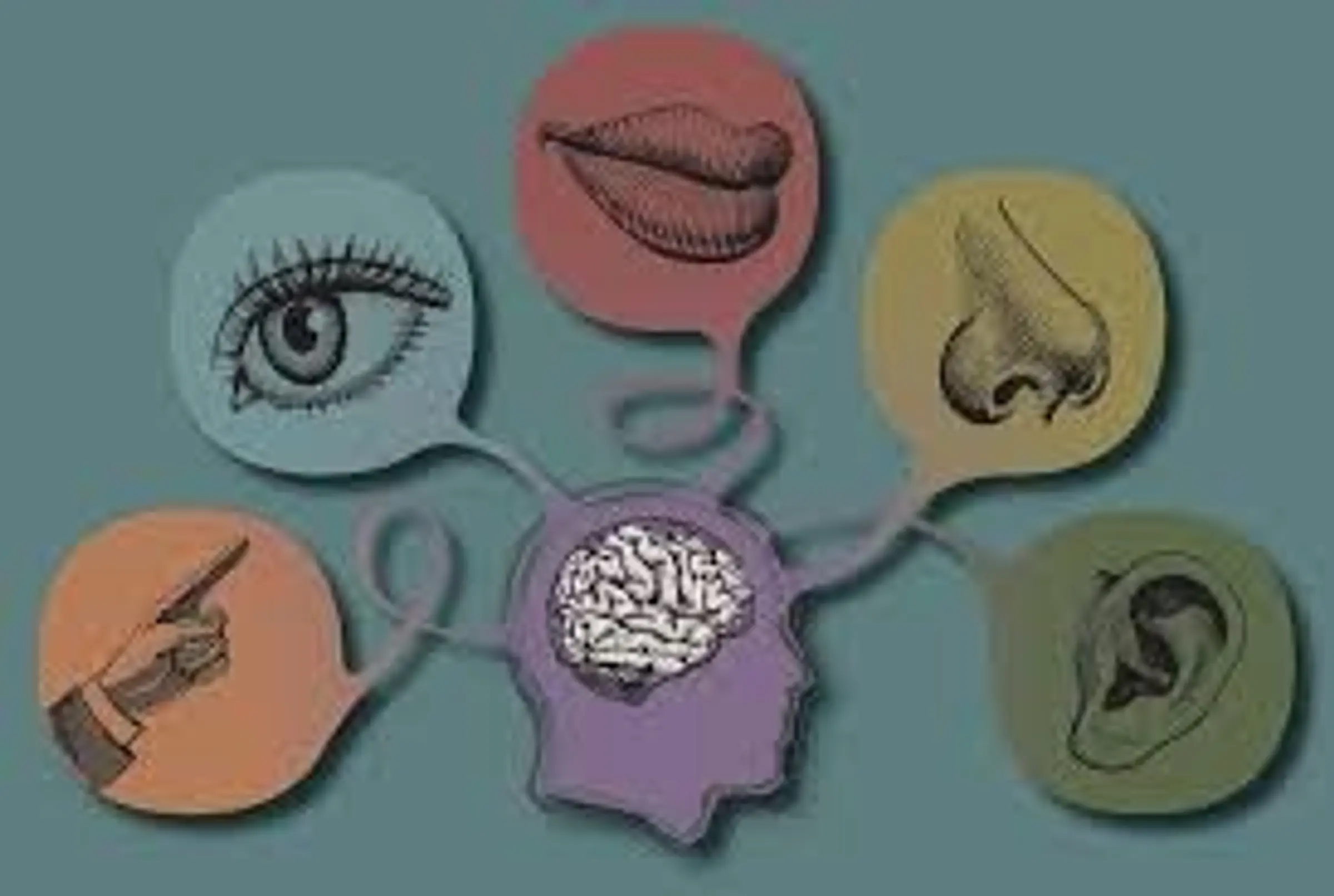
Pratyahara is generally translated as "withdrawal of the senses," because at this stage we withdraw our mind from external sense objects and draw it back into ourselves. In the normal state of perception, the senses become active first, and the mind follows. If we see a scene that attracts the senses, the mind then follows and recognizes that scene as pleasant, agreeable, or beautiful.
Although these two forms of recognition are so close together that it is very difficult to tell which came first and which followed, careful observation will show that the senses come first and the mind follows them.
Therefore, the first step in pratyahara is not to withdraw the senses from the objects of the senses, but to withdraw the mind from the senses. Once you are able to withdraw, separate, or disconnect the mind from the pull of the senses and internalize it, the senses will follow the mind — and that is the secret of pratyahara. So, according to this principle, the definition of pratyahara is the withdrawal of the mind from the senses, not the withdrawal of the senses from the objects of the senses.
The withdrawal of the mind must be understood from several perspectives. Let us begin with the relevant sutra from Patanjali's Raja Yoga Sutras:
स्वविषयासंप्रयोगे चित्तस्यस्वरूपानुकार इवेन्द्रियाण प्रत्याहारः ।।५४ ।। ।। ।। ।। ।। ।। ।। ।। ।।
Svavishayaasamprayoge chittasyvaroopaanukaara ivendriyaanaam pratyaahaarah (Sadhana Pada: 54)
This sutra can be translated as: "Pratyahara is the restraining of the senses and the mind, drawing them back from their respective objects." The key Sanskrit terms in this sutra are: sva, meaning "one's own"; vishaya, meaning "object"; and asamprayoge, meaning "not coming into contact." These words describe the state of pratyahara. Sva refers to what one feels, experiences, and observes — one's own experience. Vishaya is the object of experience. Everything we see is an object of experience. When you look at a person, what do you see? Do we see only the body, or do we see the personality, the mentality, the behavior and bearing? In a single glance we see the full picture of the person.
This objective awareness carries with it various experiences — physical, mental, emotional, and psychic — all merged into a single form. What do you think, for example, when you look at a swami? If you observe him only as a material object and nothing more, then that swami will be only a body. There will be no feeling of happiness or joy connected with the body. But when you look at a swami, you experience all of these things merged into a single image.
So vishaya, though broadly translated as "object," is in fact a combination of identity, physical structure, and idea — the mental, emotional, and psychic expressions of a personality contained within a name and a form. Therefore, when we look at something, we see many different components merged into one, and this is exactly how we perceive the world we live in. It is this very perception that creates our understanding or knowledge of what is good and what is bad, pleasant and unpleasant, comfortable and uncomfortable, and so on. The experience or concept of duality grows out of vishaya.
Now set people aside and simply look at any structure or statue. When you walk into a museum and see an inanimate object for the first time, an association and an idea arise immediately. You see a statue of a figure dressed in a particular kind of clothing, and so you recognize it, for instance, as a prehistoric image or the image of a warrior. An association of ideas takes place, and that association is vishaya. When you know someone closely, it is not only associations of the imagination that occur, but real experiences gained through personal interaction that give the full picture. It is not just a name, a form, or an idea; all three are joined together.
The third Sanskrit word important to our understanding of this sutra is asamprayoge, meaning "not coming into contact." "Sva vishaya asamprayoge" equals pratyahara. Here, "not coming into contact" means that there is no personal identification with vishaya. How does one become aware of vishaya? Through the mind. The mind recognizes or acknowledges vishaya through the senses. So when the mind is withdrawn from the senses, there is no contact with vishaya. The organs of sight, taste, smell, touch, and hearing continue to exist and function, but the capacity to recognize the messages conveyed by the sense organs has been disconnected.
The clearest definition of the influence of the senses on the mind is found in the second chapter of the Bhagavad Gita. Five thousand years ago, on the battlefield, Arjuna asked Krishna: "What can I do to control and direct my troubled mind?" Krishna's answer is itself a definition of pratyahara: "The mind is troubled when it is unable to find satisfaction and fulfillment in its dealings with the objects of the senses and the world." Therefore, to balance and calm the mind, it is necessary to disconnect the mind from the senses and the material world.
This disconnection is not a rejection or renunciation of connection, but the wisdom to know when to connect and when to disconnect.
Krishna goes on to tell Arjuna: "Just as a tortoise withdraws its limbs into its shell when it senses danger, we should be able to withdraw our senses into our own shell." The greatest danger we face in life is dissatisfaction and lack of fulfillment, because these states cause a change in a person's personality and perception. They create obsessions in the human mind that limit the vision of wisdom. When we lose our connection to wisdom, it is, without question, the death of human character.
Krishna goes on to define how external associations can produce various negative states in the mind. Association with the objects of the senses leads to attachment. Attachment gives rise to expectation, and when those expectations are not fulfilled, frustration arises, which limits clarity of vision.
Frustration gives rise to obsessions, and we forget what is good and what is bad. Desire becomes the goal, and the fulfillment of that desire becomes the drive. In this pursuit of fulfillment we ignore the existence of others, we ignore our interactions with others, and this leads to confusion. Confusion leads to the death of logic, which leads to the death of personality. This is the sequence that Krishna defined in the second chapter of the Bhagavad Gita.
Krishna tells Arjuna that we must become aware of our connections within the world of the senses and recognize which of these connections have a negative effect on our nature and which have a positive one. We must then learn to deal with the negative influences. This is also the theory of pratyahara.
For practice, there are several very effective techniques, such as
– Ajapa japa
– Trataka
– Yoga nidra
– Antar mouna
I will share these practices with you in upcoming posts.
Piyush Mittal
Nirmala.pl Institute of Yoga and Ayurveda
Text inspired by a lecture by Swami Niranjanananda Saraswati
from the book Yoga Darshan: The Vision of the Yoga Upanishads
Image source: the Internet
Enjoyed this article?
Share this knowledge with your family or friends.
Piyush Mittal
· Founder of the InstituteTeacher of Integral Yoga, expert in traditional Ayurveda, and practitioner of Marma point therapy. For years he has combined authentic, source knowledge from India with a modern understanding of health and human development.


